Burberry · Product design · User research
Innovation, brand heritage and checkout design
I was part of the team with Clearleft, a design agency, and this is the story of how we used rapid prototyping, user research and some cunning techniques to create a new checkout for Burberry.
- Client
- Burberry
- Design agency
- Clearleft
- Duration
- 4 months
- My role
- User Researcher
- Activities
- User Research, Data Analysis, Generating Insights, User Testing, User Testing Videos, Interactive prototyping, Functional spec, Client presentations
My impact
Before
Checkout had to carry a luxury brand without costing people the purchase.
Results
- Completed checkout in 4 months We demonstrated that rapid prototyping, LEAN principals and focused work could create high value in a short space of time
- Influenced design culture at Burberry A mindset shift across the design team in user centered design.
The challenge
Burberry was looking to redesign their checkout and Clearleft a top design agency had been awarded the gig. Burberry; is deeply a brand-led organisation, so taking them on a design journey that was centered in user insights as opposed to creative direction was key.
The problem for us to solve was; How to instil client confidence using a UCD process to develop an easy, simple checkout experience that still ‘feels’ like Burberry.
Kicking off discovery
I worked in a small team of 3; with as a User Researcher alongside a UI designer, Technologist. Over the course of 5 months we used a range of tools and methodologies, working in 2 weeks sprints, prototyping, testing and iterating as our understanding developed.
My role
- To understand the users, pain points and challenges, by evaluating at the existing site experience.
- Develop user testing scripts, consent forms
- Conduct user tests of existing mobile website
- Review analytical data for insights
- Develop proto-personas
- Be a constant and a retail friend to the client (I had just finished 5yrs at John Lewis, which bought a degree of credibility with the client)
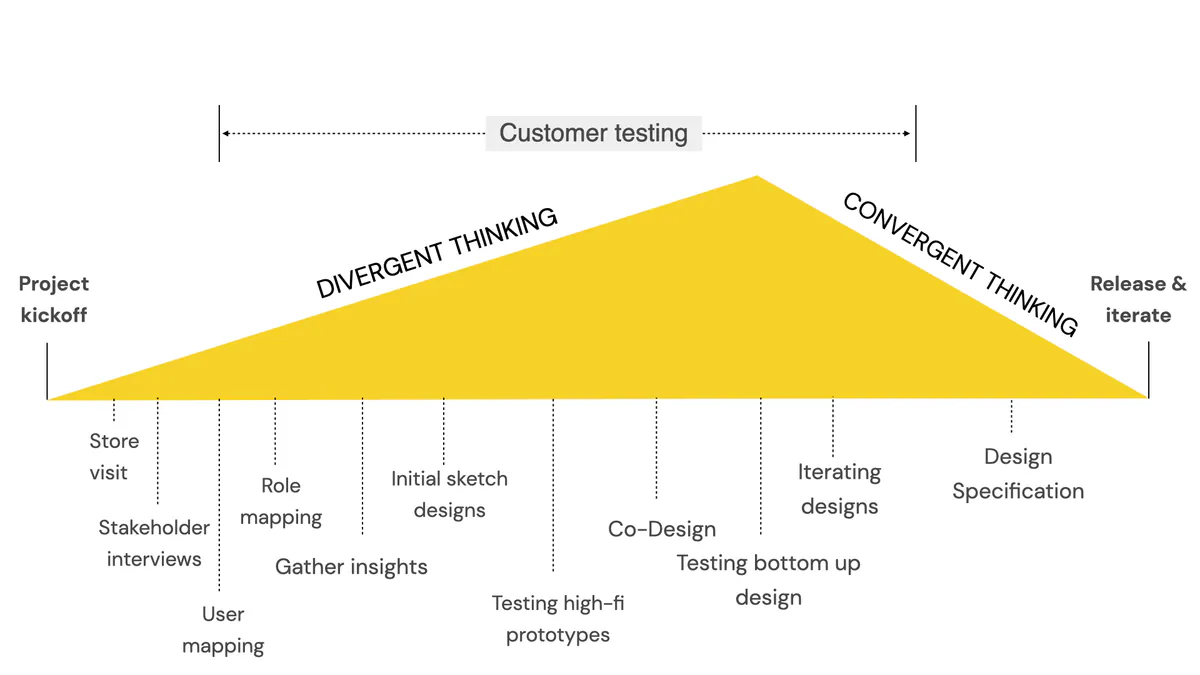
Overview of project activities
Forming hypothesis
- Supported team and client to co-create created customer / business goals,
- Worked with design team to form several design hypothesis from interaction, layout to different checkout models.
- Created test card format to consolidate and track hypotheses
- Test cards shared with client, displayed wall space in clients office, giving full visibility to stakeholders on what was being tested as well as learnings captured.
- Using wall space in Burberry was unheard of at the time and went against the culture. This was part of my effort to disrupt their way of thinking and introduce new design methods.
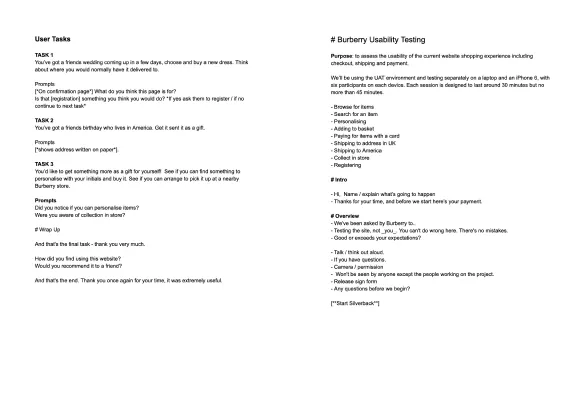
User testing scripts

My test card tools adapted from value proposition design
Ideation & prototyping
- Drawing on insights from user testing and research we sketched ideas and worked them up into a few different prototypes.
- User tested each week with different interactive prototypes, feeding back to design team as we iterated
- Developed Axure interactive prototypes for testing different checkout models
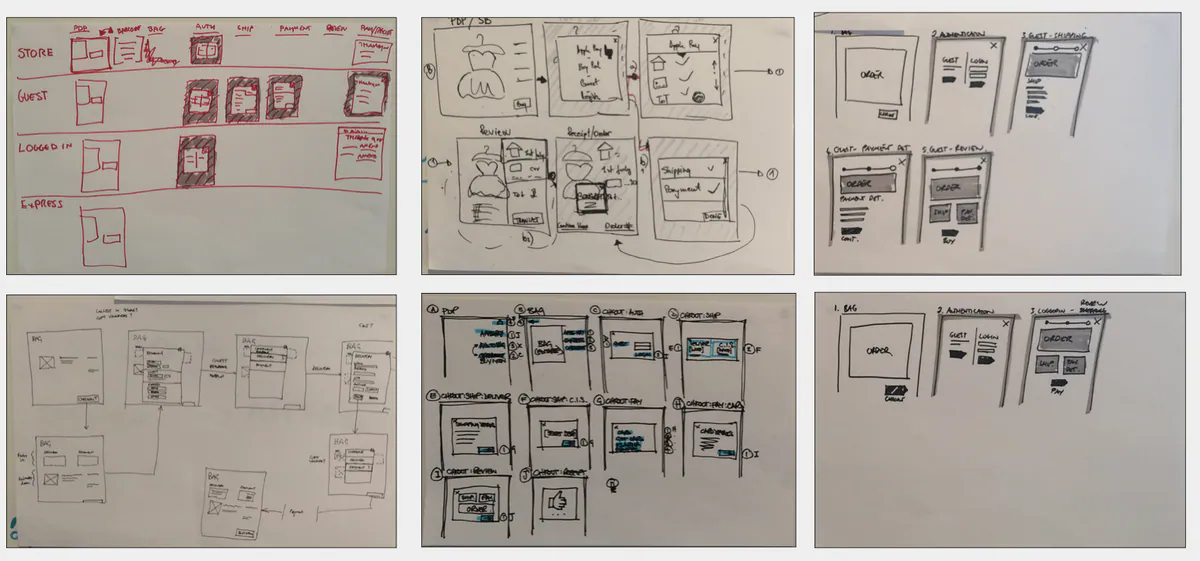
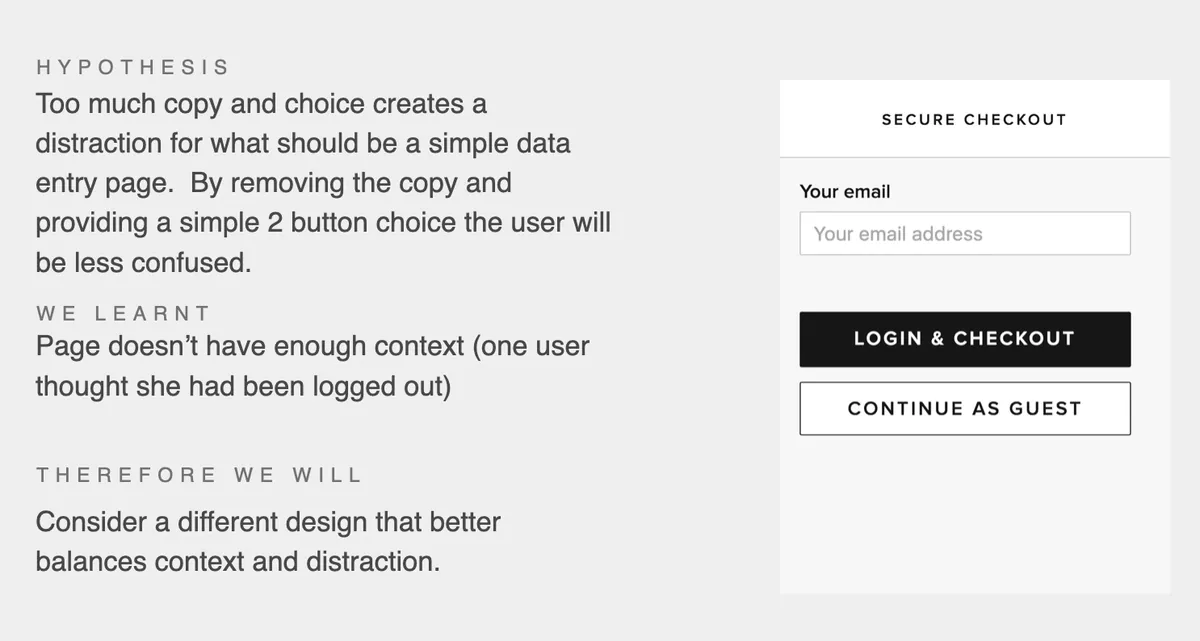
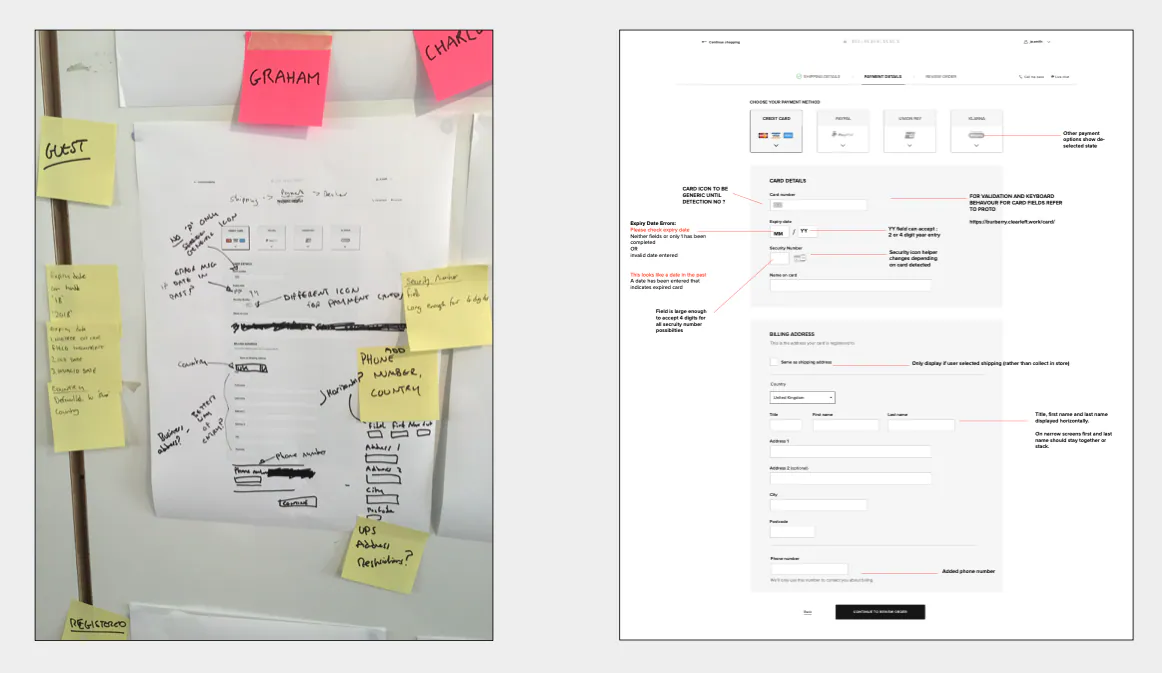
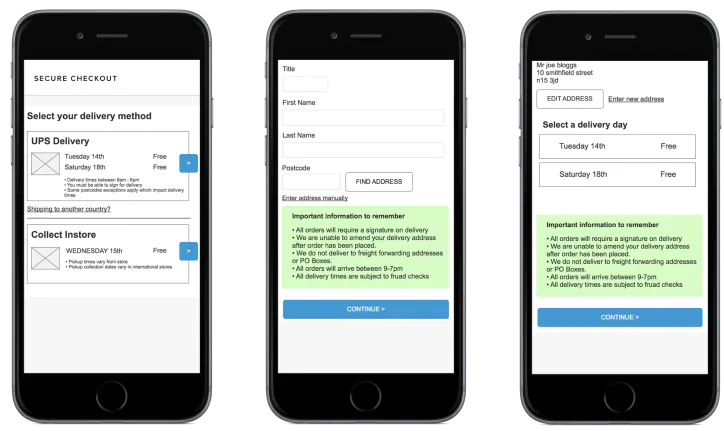
Samples from the design ideation, hypothesis, prototypes and feedback
Co-design sessions with the client
We held co-design sessions to explore different checkout models. This helped move the design forward by getting the whole team focused on a single problem.
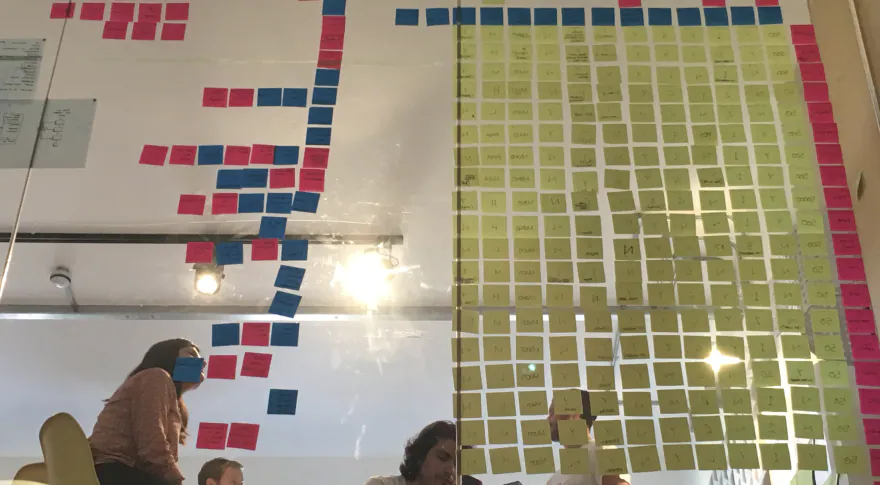
Mapping different checkout models
Measuring & tracking emotion
It was important that my research gave confidence that customers would find it simple and easy and critically, feel like it is a Burberry experience.
Measuring and quantifying emotion
A great tool to measure and quantify emotion (that UX researcher James Chapman introduced to me at John Lewis) is the Bipolar Emotional Response Technique (BERT). It works by asking users to rate their level of emotional response by comparing two adjectives together.
As I tested more participants each week, I track emotional perceptions against design decisions. So, for example, participants rated the checkout as generally in the ‘confusing region’. As we learnt from the insights gathered we tweaked the prototype. We could then see immediate emotional feedback with the subsequent tests showing the ‘confusing’ score moving towards ‘Clear’.
Tracking and sharing this moving perceptional trend was critical in getting buy in with the client.
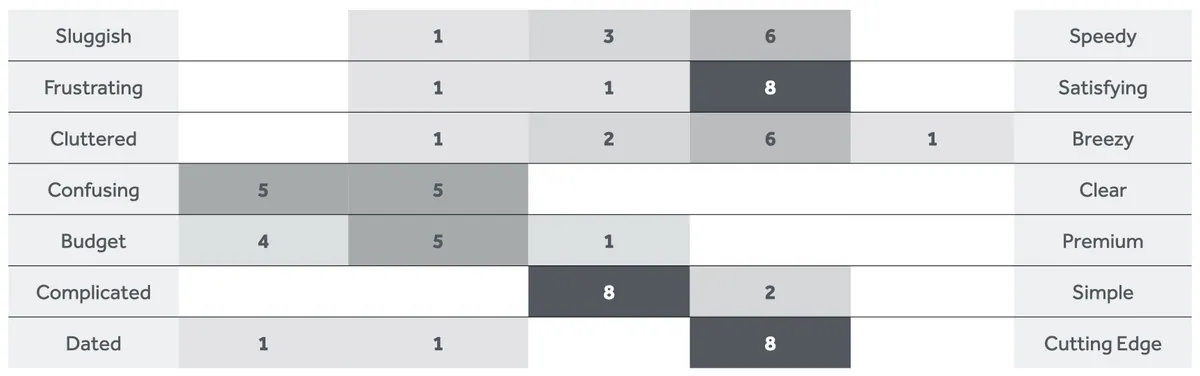
First prototype BERT scores indicated perception of speed, frustration, and overall confusion was still an obstacle.
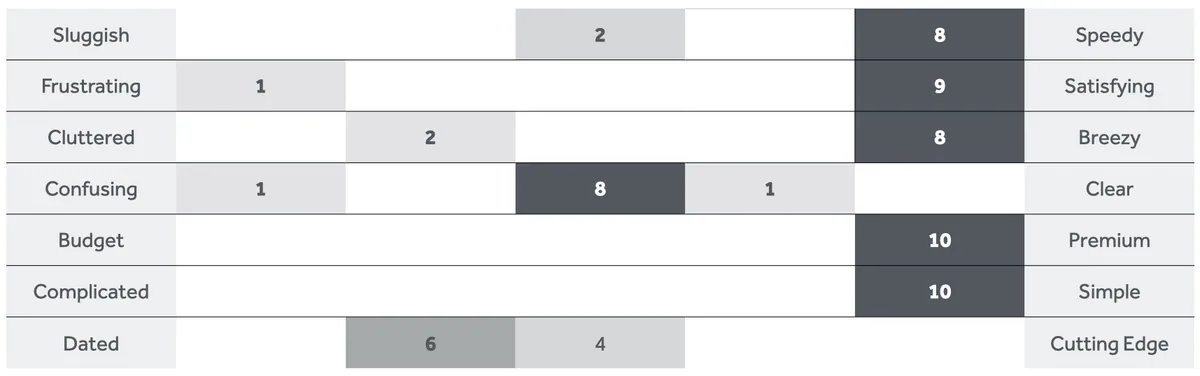
…and by the 6th prototype the scores improved
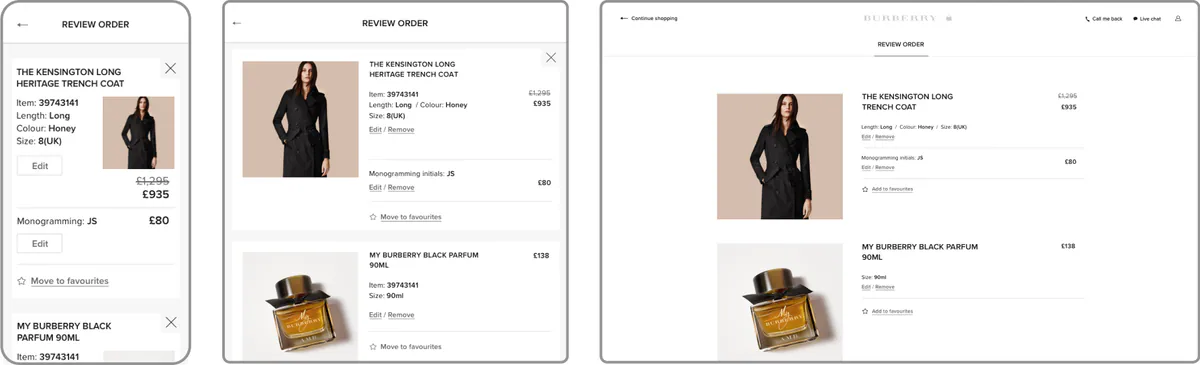
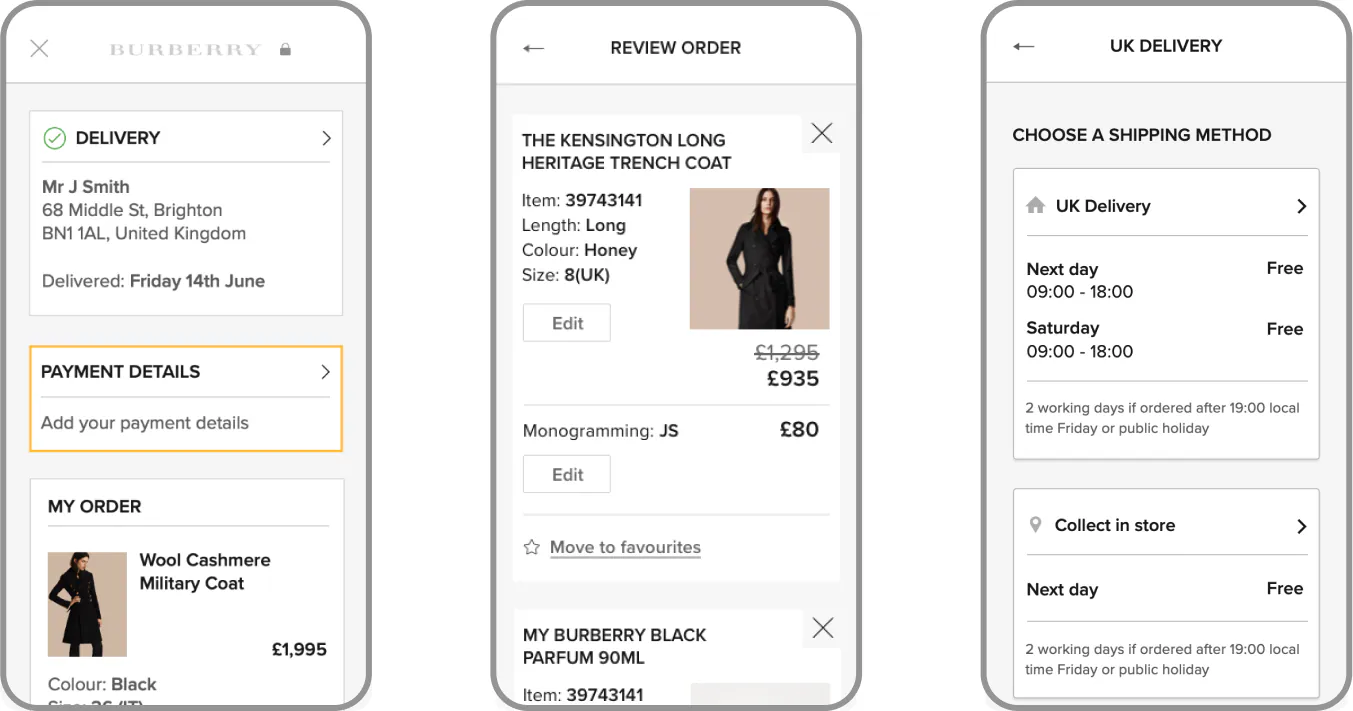
Final checkout design
Final reflections
Over the course of 5 months we tested dozens of different prototypes in what became a cadence of test and learn. We were fully transparent with the client, sharing what worked and what didn’t. This was a risky approach as it was a very risk adverse culture that wasn’t used to iterative design. Ultimately though the approach worked as we were able to demonstrate improvements and bring the client along for the journey. The BERT tests were also pivotal in creating confidence that the look & feel resonated with Burberry customers expectations.
Danny introduced innovative ways of working, demonstrated solid and imaginative design thinking and built a good rapport with our clients.
 Richard RutterCo-Founder, Clearleft